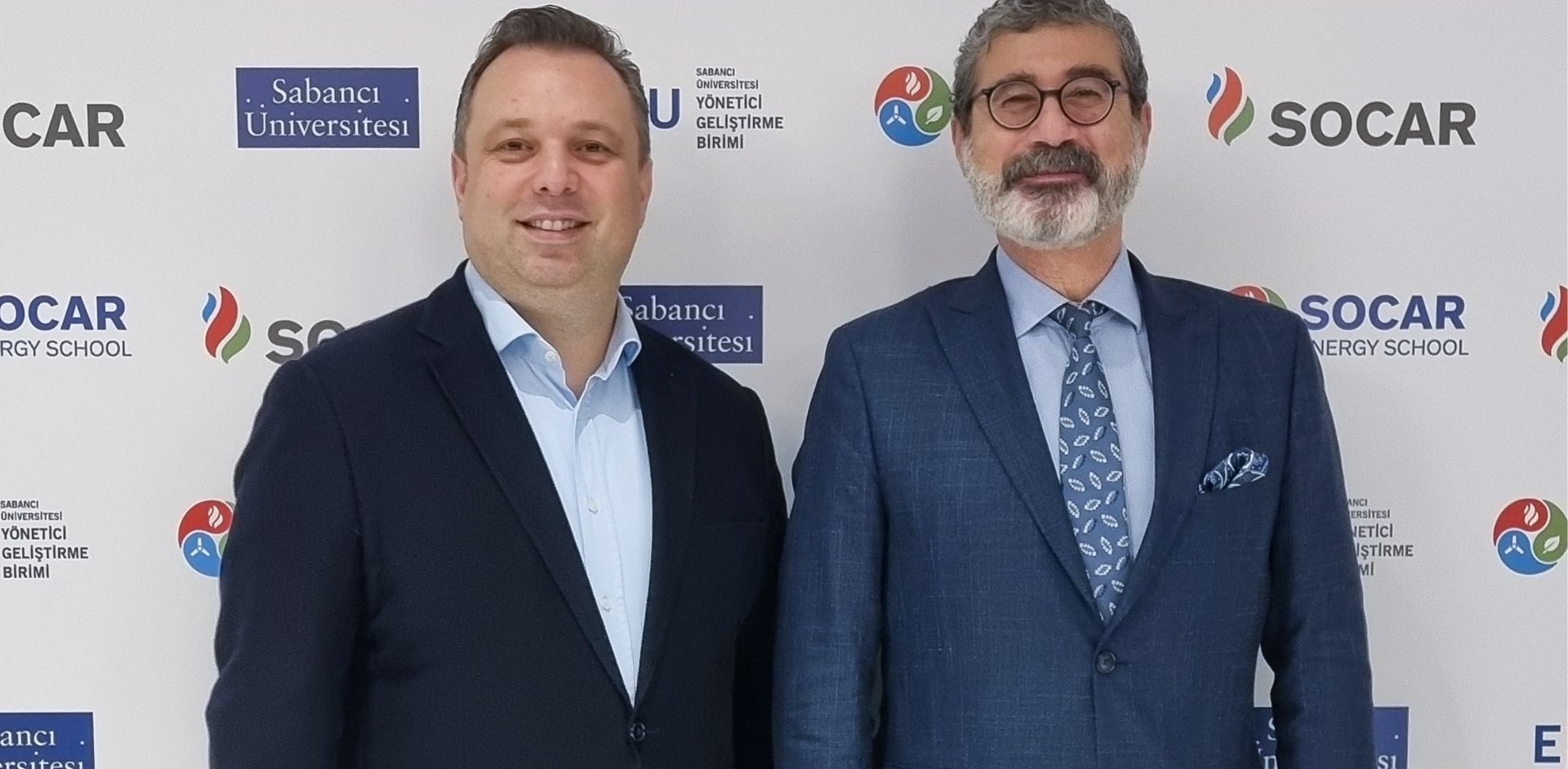
The first lesson of the second semester of SOCAR Energy School took place in Aliağa
The first lecture of the SOCAR Energy School certificate program, organized for the second time in cooperation with SOCAR Türkiye and Sabancı University Executive Development Unit (EDU), was held in Aliağa, where SOCAR Türkiye’s production facilities are located. At the opening ceremony attended by 66 participants accepted to this year's program and some of last year's graduates, SOCAR Türkiye Acting CEO Elchin Ibadov gave the first lecture.
The first lecture of SOCAR Energy School certificate program, organized by SOCAR Türkiye, Türkiye’s largest integrated industrial group, in cooperation with Sabancı University's Executive Development Unit (EDU), was held in Aliağa on November 25.
SOCAR Türkiye CEO’su (vekaleten) Elchin Ibadov,said: "At SOCAR Türkiye, we are proud to continue SOCAR Energy School, which we launched last year with the idea that we have the responsibility of raising competent people whose knowledge is consulted in every field of energy, which is our main subject, based on our motto "We are Together, We are Strong". I believe that all participants from the public, private sector, press and academia who are selected for this certificate program will have a 360-degree perspective in the field of energy and will make a great contribution to both themselves and the sector."
Sabancı University Rector Prof. Dr. Yusuf Leblebici stated that the Executive Development Unit, EDU, makes a difference in the development journeys of institutions and individuals, and said, "As a university that acts with the mission of creating and developing together, we are happy to contribute to the strengthening of the energy sector in Türkiye in terms of qualified human resources in the energy sector in cooperation with SOCAR Türkiye."
In SOCAR Energy School second year certificate program, the courses, which will be conducted mainly on the online platform after the first face-to-face course, will end on January 29, 2024.
In the certificate program, courses on global and regional energy issues, the Caspian Basin and the energy policies of Türkiye and Azerbaijan, climate change and energy security, the status and future of renewable energy resources are taught by world-renowned experts in the field of energy and faculty members from national and international universities.