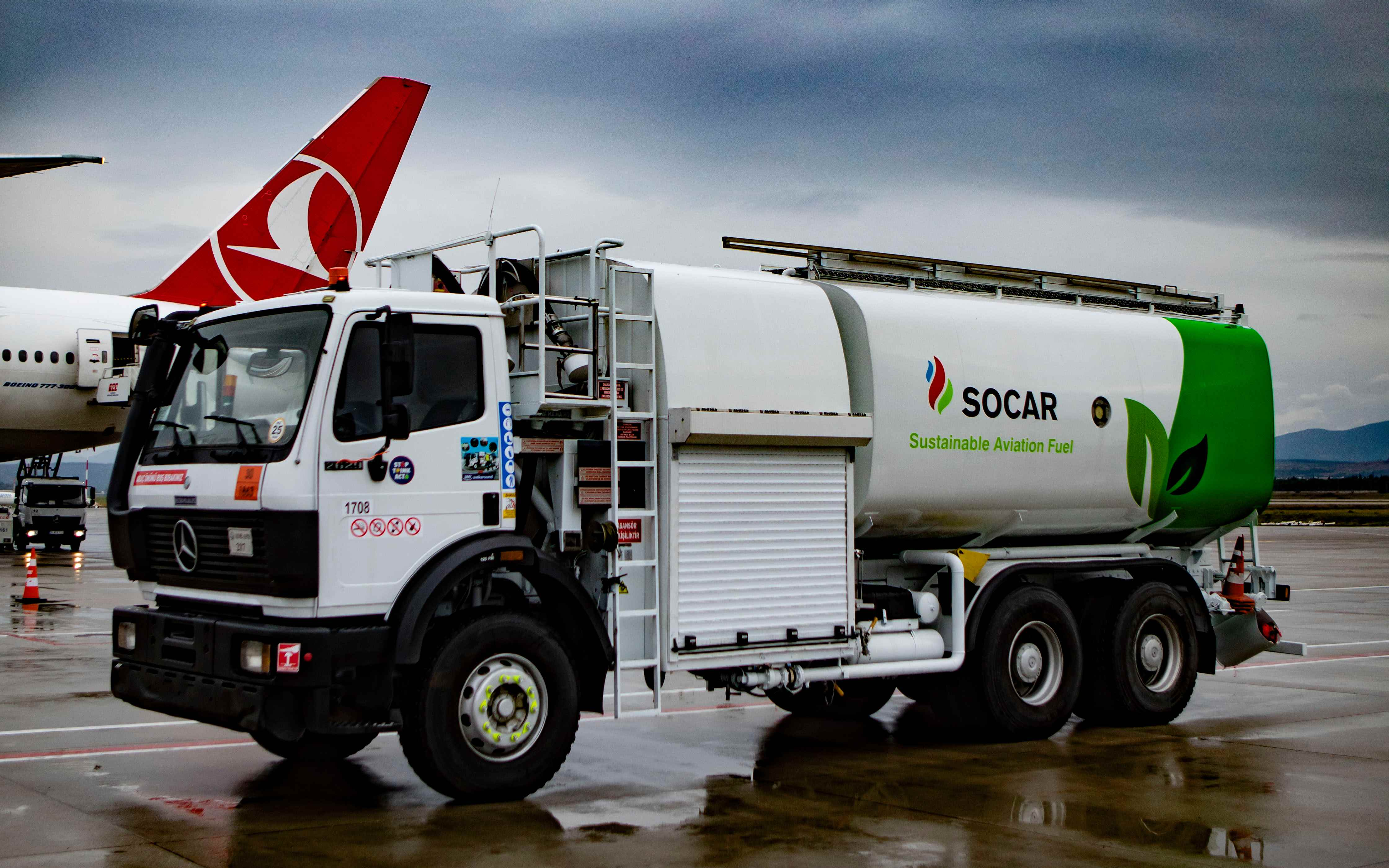
SOCAR Türkiye Launches Sustainable Aviation Fuel (SAF) Trading
SOCAR Türkiye, Türkiye's largest direct foreign investor and integrated industrial group, is launching Sustainable Aviation Fuel (SAF) trading to accelerate sustainability-focused transformation in the energy sector and contribute to reducing aviation-related carbon emissions. In line with its approach of placing low-carbon solutions at the center of its business model, the company launched its first commercial operation in the SAF field on January 29, 2026.
In line with its approach of supporting the development of the Sustainable Aviation Fuel (SAF) ecosystem, SOCAR Türkiye aims to contribute to the transformation steps towards emission reduction in aviation by strengthening its collaborations with industry stakeholders.
In this context, a Memorandum of Understanding covering cooperation in the field of Sustainable Aviation Fuel (SAF) was signed between SOCAR Türkiye and Turkish Airlines on August 13, 2025; the two institutions agreed on sustainability-focused strategic steps in the energy and aviation sectors. The first commercial operation to be launched represents an important milestone in this cooperation.
Elchin Ibadov, CEO of SOCAR Türkiye,commented on the matter, stating: "We view sustainability as one of the fundamental elements of our business approach; we operate with a transformation mindset that considers environmental and social impacts. Our extensive knowledge in the energy sector and our integrated business model enable us to take concrete steps towards a sustainable future. Our Sustainable Aviation Fuel (SAF) initiative, carried out with the capacity, R&D strength, and digital expertise of our group company STAR Refinery, is also an important reflection of this vision. We believe that our work in the field of jet fuel will develop further in the coming period and pave the way for new partnerships. As SOCAR Türkiye, we will resolutely continue our work and investments focused on environmental and social benefits.
SAF produced from renewable sources is an important option for reducing emissions
Sustainable Aviation Fuel (SAF), produced in accordance with the sustainability criteria set by the International Air Transport Association (IATA) and ICAO, can provide significantly lower life cycle emissions compared to traditional jet fuel, depending on the appropriate raw materials and life cycle assessment (LCA) conditions. HEFA-based SAF, obtained from suitable renewable sources such as used cooking oils and other biological waste, is considered one of the important tools defined in international frameworks for emission reduction in the aviation sector.